
Table of Contents
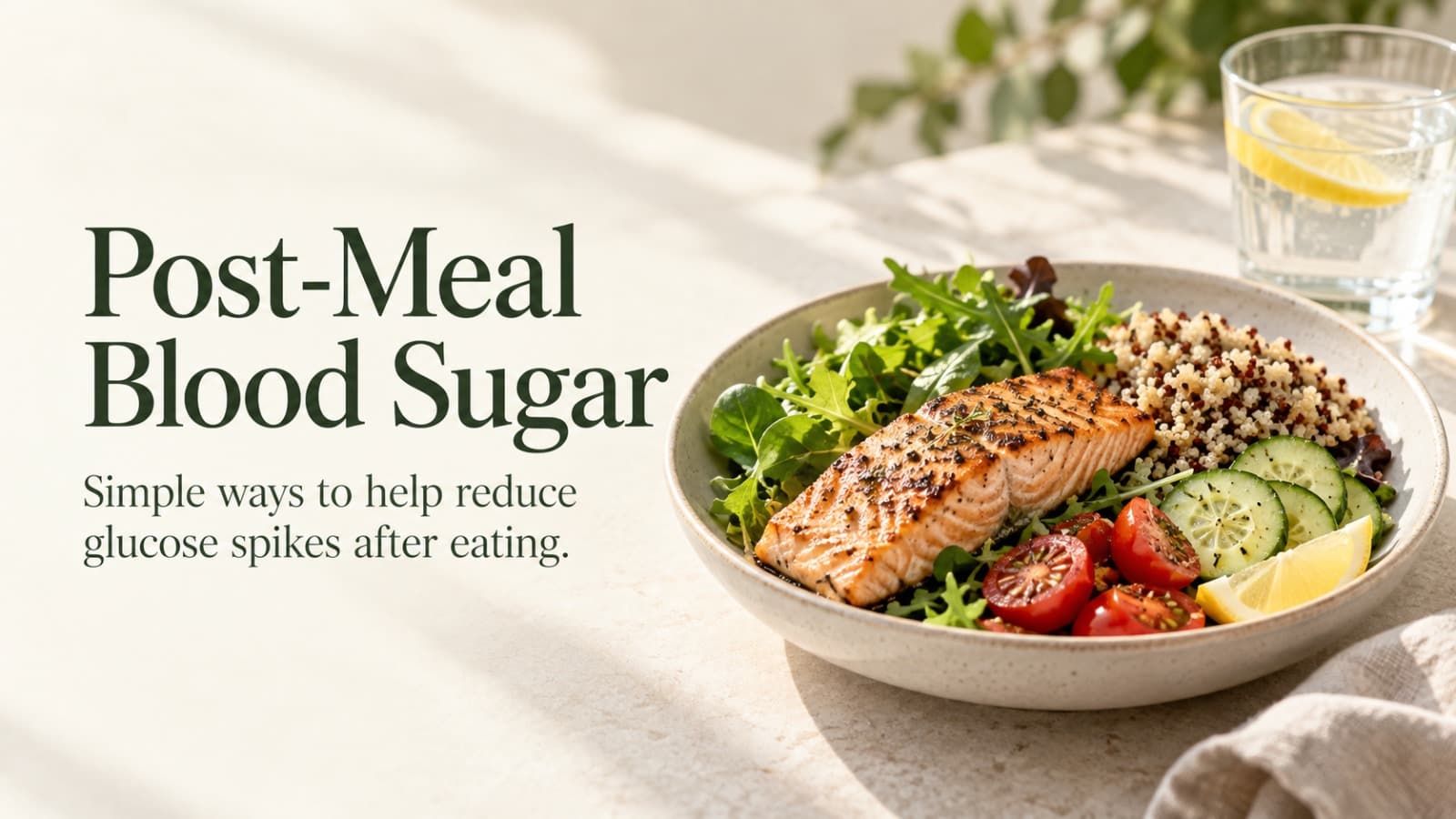
Simple Ways to Avoid Blood Sugar Spikes After Meals (2026 Guide)
What Is a Blood Sugar Spike?
A blood sugar spike is a fast, sharp rise in glucose after you eat. Doctors call it a postprandial spike.
Some rise is normal. Your body turns food into glucose. Glucose gives you energy. The problem starts when the rise is too high or too fast, again and again.
For people without diabetes, blood sugar usually stays under 140 mg/dL about two hours after a meal. Many adults with diabetes aim for under 180 mg/dL one to two hours after they start eating. Your doctor may give you a different goal. Follow that goal first.
Why Does Blood Sugar Rise After Eating?
Carbs break down into glucose. The faster they break down, the faster your sugar climbs.
Several things change how big the rise is:
- The type of carb (white bread rises faster than oats)
- The size of the meal
- What else is on your plate
- How active you are
- Your sleep and stress
- How well your body uses insulin
Insulin moves glucose out of your blood and into your cells. If your cells respond poorly, sugar stays high longer. This is called insulin resistance. It is one reason the same meal can affect two people in different ways.
Simple Ways to Keep Your Glucose Steady
1. Eat Veggies and Protein First
The order of your meal matters. Small studies show that eating vegetables and protein before carbs can lower the after-meal rise. Fiber and protein slow how fast food leaves your stomach.
Try this. Start with a salad, some beans, eggs, or chicken. Eat the rice or bread last.
2. Add Fiber to Every Meal
Fiber slows sugar absorption. It also keeps you full.
Good choices are lentils, chickpeas, oats, apples, berries, nuts, and leafy greens. Add one fiber food to each meal. That is enough to start.
3. Take a Short Walk After Eating
This is one of the easiest tips. Your muscles use glucose when you move. A walk of 10 to 15 minutes after a meal can help lower the rise. Even light movement helps.
No time to walk? Stand up and do chores. Pace while you take a phone call. Any gentle movement is better than sitting.
4. Pair Carbs With Protein or Healthy Fat
A plain carb snack digests fast. A paired snack digests slower.
Here are some simple swaps:
- Apple with peanut butter, not apple juice
- Toast with egg, not toast with jam
- Yogurt with nuts, not a sweet pastry
5. Choose Whole Foods Over Refined Foods
Whole foods keep their fiber. Refined foods lose it. That is why brown rice, whole oats, and whole wheat usually raise sugar more slowly than white rice, white bread, and sweet cereal.
Glycemic index (GI) can help here. Low-GI foods raise sugar slowly. But portion size matters too. A big bowl of a low-GI food can still cause a rise.
6. Skip Sugary Drinks
Liquid sugar hits fast. Soda, sweet tea, energy drinks, and fruit juice have no fiber to slow them down. Water, plain tea, and unsweetened drinks are safer picks.
7. Keep Portions Reasonable
Large meals lead to bigger spikes. Even healthy food can do this. Try filling half your plate with non-starchy veggies. Fill a quarter with protein. Fill the last quarter with carbs.
8. Consider a Little Vinegar
Some small studies link vinegar before a carb-rich meal with a lower glucose rise. The evidence is mixed. It is not a cure. If you try it, mix a small amount in water and do not drink it straight. Ask your doctor first if you have stomach issues or take diabetes medicine.
9. Sleep Well and Manage Stress
Poor sleep can make your body respond worse to insulin. Stress raises hormones like cortisol, which can push sugar up. Aim for steady sleep. Try a short walk, deep breathing, or quiet time to ease stress.
Quick Comparison: Which Habit Gives You What?
| Habit | How to Do It | Why It Helps |
|---|---|---|
| Veggies first | Start meals with salad or cooked greens | Slows digestion |
| Post-meal walk | 10–15 minutes of easy movement | Muscles use glucose |
| Protein with carbs | Add eggs, beans, fish, or yogurt | Slows sugar release |
| Whole grains | Swap white rice or bread | Adds fiber |
| Water over juice | Pick water or plain tea | Cuts liquid sugar |
| Smaller portions | Use a smaller plate | Less glucose at once |
Common Mistakes to Avoid
Many people make the same errors. Here are a few.
- Skipping meals. You may eat too much later, and that can cause a bigger rise.
- Eating “healthy” food in huge amounts. Portion size still counts.
- Drinking fruit juice as a health drink. Whole fruit is a better choice.
- Eating carbs alone. Add protein, fat, or fiber.
- Sitting right after dinner. Even a slow walk helps.
How to Know If Your Habits Are Working
You can check your own response. People with diabetes can use a glucose meter. Some use a continuous glucose monitor (CGM). Check your sugar before a meal, then again one to two hours later.
If you do not have diabetes, you do not need to track every meal. Watch how you feel instead. Big energy crashes, strong hunger soon after eating, or long tiredness may be signs to talk with a doctor.
When to Talk to a Doctor
Speak with a healthcare professional if you notice any of these:
- Very high readings again and again
- Extreme thirst or frequent urination
- Blurry vision
- Unplanned weight loss
- A family history of diabetes and new symptoms
Do not change your medicine on your own. Your doctor or dietitian can build a plan that fits you. This article is for education. It is not medical advice.
What is the fastest way to lower blood sugar after eating?
A short walk is one of the fastest natural ways. Ten to fifteen minutes of easy movement helps your muscles use glucose. Drinking water can also help. If you have diabetes, follow your doctor’s plan.
What foods stop blood sugar spikes?

No single food stops a spike. But fiber, protein, and healthy fats slow it down. Beans, lentils, eggs, nuts, yogurt, oats, and non-starchy vegetables are good choices.
Does the order of food really matter?
Yes, it can. Small studies show that eating vegetables and protein before carbs may lower the rise after a meal. The effect differs from person to person.
Is a blood sugar spike always a sign of diabetes?
No. Everyone has some rise after eating. A spike alone does not mean you have diabetes. If it happens often, or you have symptoms, see a doctor for testing.
What is a normal blood sugar level two hours after eating?
For people without diabetes, it is usually under 140 mg/dL. Targets can differ for people with diabetes, so use the goal your doctor gives you.
Can I still eat carbs?
Yes. Carbs are not the enemy. Your body needs them. The goal is to choose slower carbs, eat fair portions, and pair them with other foods.
Conclusion
Controlling blood sugar spikes after meals does not need a perfect plan. Start with one or two habits. Eat veggies and protein first. Add fiber. Walk after meals. Swap sugary drinks for water. Choose whole foods and watch your portions.
Pay attention to how your body responds. If you have diabetes or worry about your numbers, work with a doctor or dietitian. Steady habits, done daily, matter more than any quick fix.
Your Blog Questions, Answered
A blood sugar spike is a fast, sharp rise in glucose after you eat. Doctors call it a postprandial spike.
Comments (0)
No comments yet.
Be the first to share your thoughts!
Baked fresh daily by baker's with passion.
Stay updated with the latest health insights delivered to your inbox.