
Table of Contents
The Shocking Truth About Hidden Sugars in Everyday Foods (2026)

What Are Hidden Sugars?
Hidden sugars are sugars put in food while it is made. You may not expect them there.
Fruit has its own sugar. So does plain milk. That kind is natural. It does not count as added sugar.
Added sugar is different. A maker puts it in for taste, color, or a longer shelf life.
Here is an easy way to tell them apart:
- Natural sugar: whole fruit, plain milk, plain yogurt.
- Added sugar: poured in during making or cooking.
It is “hidden” because you may not see it. It can sit in a sauce or a snack bar.
How Much Added Sugar Is Too Much in 2026?
The US put out new diet rules in January 2026. They are firmer than the old ones.
They say no amount of added sugar is part of a healthy diet. They also set a cap. One meal should have 10 grams or less.
The old rule was not the same. It said to keep added sugar under 10 percent of daily calories. On a 2,000 calorie day, that came to about 50 grams.
| Rule | Main limit | What it means |
| 2020–2025 | Under 10% of daily calories | About 50 g a day on 2,000 calories |
| 2025–2030 | 10 g or less per meal | Aim for as little as you can |
The new rules also speak to young kids. They say to avoid added sugar in early childhood.
Which Foods Hide the Most Sugar?
Candy is easy to spot. The tricky foods are the ones that seem fine.
Sauces and Dips
Ketchup is a good example. So are barbecue sauce, teriyaki sauce, and honey mustard. Most of us use more than one spoon. The sugar adds up fast.
Flavored Yogurt
Plain yogurt has no added sugar. Flavored yogurt is not the same. Some cups hold up to 16 grams of added sugar. That one cup can break the 10 gram limit.
Bread and Beans
Sugar shows up in salty foods too. Bread, baked beans, and tomato sauce may all have it.
“Healthy” Foods
Be careful with claims on the front of a pack. A food low in fat or salt can still be high in sugar. Think of cereal, granola, and low-fat dressing.
Drinks
Soda is no shock. But fruit drinks, sweet tea, and energy drinks count too. The rules also say to limit juice. Even 100 percent juice should be small or mixed with water.
Here is a simple map:
| Food type | Where sugar hides | What to check |
| Sauces | Ketchup, barbecue, teriyaki | The added sugar line |
| Dairy | Flavored yogurt | “Includes added sugars” |
| Breakfast | Cereal, granola, bars | The order of the list |
| Bread | Loaves and buns | Syrup in the list |
| Drinks | Juice, tea, coffee drinks | The serving size |
Other Names for Sugar
Sugar has many names on a label. Makers use dozens.
Here is a simple rule. Look for the word “sugar.” Look for the word “syrup.” Look for words that end in “-ose.”
More names to know:
- Cane sugar
- Corn syrup
- Rice syrup
- Dextrose
- Maltose
- Fruit juice concentrate
- Maltodextrin
- Honey
- Coconut sugar
Honey and coconut sugar sound pure. They still count as added sugar in a product.
How to Spot Hidden Sugars on a Label
You do not need to be an expert. Do three quick checks.
Step 1: Find the Added Sugar Line
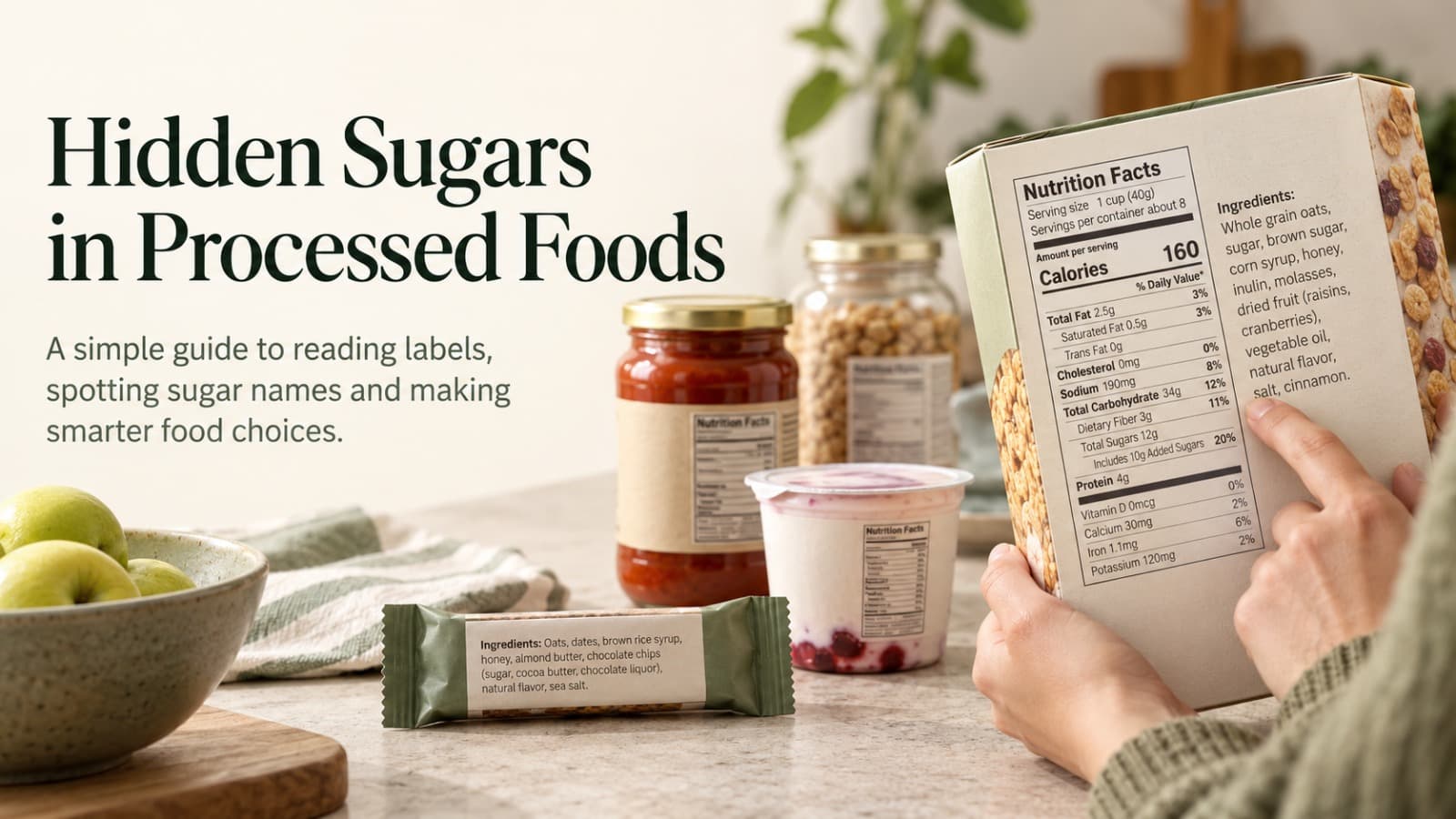
Look at the Nutrition Facts box. It shows total sugar and added sugar. Total sugar has the natural kind too. Watch the added sugar number.
Step 2: Read the List in Order
Items are listed from most to least. If sugar is near the top, the food has a lot.
Step 3: Check the Serving Size
A small serving can make the number look low. Eat two servings and you eat twice the sugar. This trick fools many people.
Why Does It Matter for Health?
Too much added sugar is linked to weight gain. It is also linked to a higher risk of type 2 diabetes. It harms teeth as well. The American Dental Association praised the new rules for this reason.
One cookie will not harm you. The daily habit matters more than a rare treat.
If you have diabetes or another health issue, ask a doctor or dietitian. They can give advice that fits you.
Easy Swaps That Cut Sugar
Small steps work best. Try these:
- Pick plain yogurt. Add fruit or nuts.
- Choose cereal with no sugar. Top it with berries.
- Mix oil and vinegar for your own dressing.
- Swap sweet drinks for water.
- Buy canned fruit packed in water, not syrup.
- Compare two brands. Pick the one with less.
Your taste will change with time. Foods you liked may start to taste too sweet.
Frequently Asked Questions
What are hidden sugars?
They are added sugars in foods that do not seem sweet. Think of sauce, bread, and yogurt. Labels often list them by other names.
How much added sugar is safe in a day?
The 2025–2030 rules say no amount is needed for health. They cap each meal at 10 grams. Less is better.
Is the sugar in fruit bad for me?
No. Sugar in whole fruit and plain milk is natural. It is not added sugar. Fruit also has fiber, which helps your body.
Is honey better than white sugar?
Not here. Honey counts as added sugar when it goes into a food. Your body treats it much like other sugars.
How do I know if a food has added sugar?
Look for the “Includes Added Sugars” line on the label. Then scan the list for “syrup” and words that end in “-ose.”
Are sugar-free sweeteners a good fix?
Not always. The new rules also say to limit low-calorie sweeteners. It is wiser to eat less sweet food overall.
Conclusion
Hidden sugars are easy to miss. They sit in sauces, bread, drinks, and “healthy” snacks. The new rules ask us to keep added sugar to 10 grams or less per meal.
You can take charge with a few habits. Read the added sugar line. Scan the list for sugar’s many names. Check the serving size. Then pick the simpler food.
Comments (0)
No comments yet.
Be the first to share your thoughts!
Baked fresh daily by baker's with passion.
Stay updated with the latest health insights delivered to your inbox.