
Table of Contents
Whole Foods vs Processed Foods: How They Affect Your Blood Sugar

What Happens After You Eat
Your gut turns carbs into glucose. Glucose is a simple sugar. It enters your blood and gives you fuel.
Then your body makes insulin. This hormone helps your cells use the glucose. A slow rise needs a small, steady amount of insulin. A fast rise needs a big, sudden amount.
How Fiber Slows Things Down
Some fiber turns into a gel in your gut. This gel slows the trip out of your stomach. Sugar then enters your blood at a calm pace.
Fiber also helps you feel full. That means fewer snacks soon after a meal.
What Counts as a Processed Food?
Not all processed food is bad. Frozen peas are processed. So are canned beans, plain yogurt, and roasted nuts. They stay close to their source. Many are fine choices.
The bigger worry is ultra-processed food. Think soda, sweet cereal, chips, packaged cakes, and instant noodles. They tend to have little fiber. They also pack in refined starch and added sugar. Many have a high glycemic index, which means they lift blood sugar fast.
Here is a quick test. Read the label. A long list with names you do not know is a warning sign.
Whole vs Processed: Side by Side
| Whole food | Processed swap | Why blood sugar reacts differently |
| Rolled oats | Sweet instant oats | Fine milling breaks the grain, so it digests fast |
| A whole orange | Orange juice | Juice loses most of the fiber |
| Brown rice | Quick white rice | The fiber-rich outer layer is gone |
| Seeded bread | Soft white bread | White flour breaks down quickly |
| Whole apple | Apple sauce with sugar | Less fiber, plus added sugar |
See the pattern? In each pair, the processed food lost fiber or lost its shape. That speeds up sugar.
What Does the Research Say?
Large studies keep finding the same link. People who eat more ultra-processed food tend to have a higher risk of type 2 diabetes. They also tend to show poorer blood sugar control.
Whole fruit tells a different story. Long-term studies link whole fruit to a lower risk of diabetes. Fruit juice has been linked to a higher risk.
There is one big catch. Most of these studies are observational. They watch what people eat and then track their health. They show a strong link. They do not prove cause.
Many also rely on memory. People do not always recall what they ate. So treat the results as strong clues, not final proof.
Insulin Sensitivity and Blood Sugar Control
Insulin sensitivity is how well your cells respond to insulin. When it is good, your body needs less insulin to do the job.
Big sugar spikes, again and again, make your body work hard. Over time, this may make blood sugar control harder.
Meals with fiber, protein, and healthy fat cause smaller swings. That is why whole foods and blood sugar tend to stay steady together.
Food is only one piece, though. Sleep, stress, body weight, and activity all matter. So do your genes.
Easy Whole Food Picks
Keep these at home:
- Oats
- Beans and lentils
- Nuts and seeds
- Eggs and fish
- Plain yogurt
- Fresh fruit
- Leafy greens and other veg
- Brown rice
Most have fiber, protein, or both. Each one helps slow the rise in blood sugar.
A Simple Balanced Plate
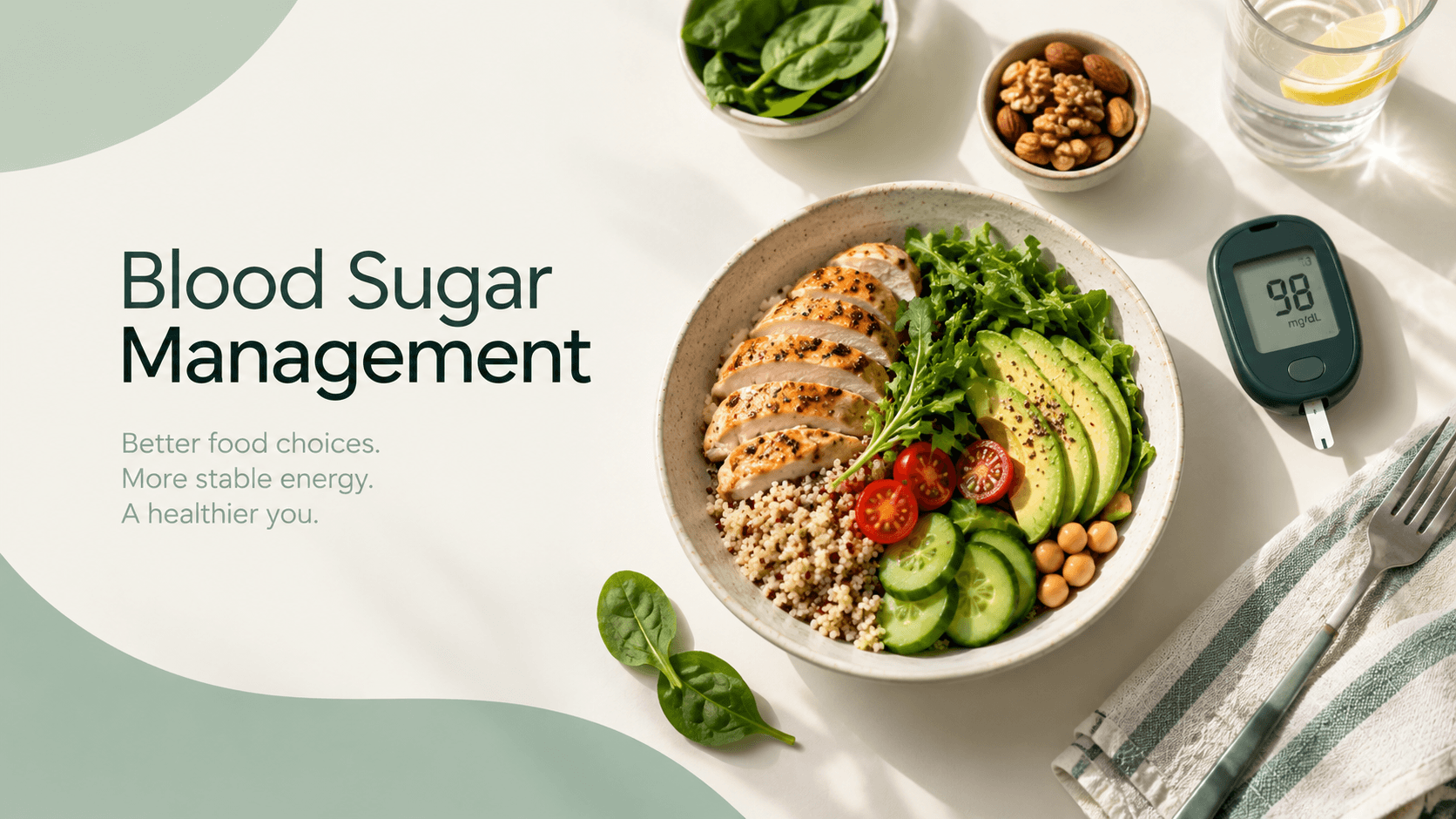
Fill half your plate with vegetables. Add a fist of beans or brown rice. Add eggs, fish, or chicken. Finish with a little olive oil.
This meal digests slowly. It keeps you full for hours.
Limits and Common Myths
Whole does not mean low carb.
Potatoes, ripe bananas, and dates still raise blood sugar. Portion size still counts.
Processed does not always mean bad.
Frozen berries and canned lentils are smart picks.
Every body is different.
Two people can eat the same meal and see different results.
Simple Ways to Eat for Steadier Blood Sugar
Swap one thing at a time.
Try whole fruit instead of juice. Try rolled oats instead of instant oats. Small swaps are easier to keep.
Pair your carbs.
Add nuts to fruit. Add eggs to toast. Add beans to rice. Protein, fat, and fiber slow digestion.
Read the label.
Look for fiber. Check for added sugar. Choose foods with short lists of items you know.
Walk after meals.
A short walk helps your muscles use glucose.
If you have diabetes or take medicine for it, talk to your doctor before you change your diet.
Frequently Asked Questions
Do whole foods raise blood sugar?
Yes, if they contain carbs. But they usually raise it more slowly. Fiber and natural structure slow digestion.
Why do processed foods spike blood sugar so fast?
Many have less fiber and more refined starch or added sugar. Your body absorbs that sugar quickly.
Is fruit juice worse than whole fruit for blood sugar?
Usually, yes. Juice loses most of its fiber, so the sugar enters your blood faster. It also fills you up less.
Are all processed foods bad for blood sugar?
No. Frozen vegetables, canned beans, and plain yogurt are good choices. Soda, chips, and sweet cereal are the main concern.
Can eating more whole foods improve insulin sensitivity?
A diet rich in whole foods is linked with better blood sugar control. Sleep, activity, and weight also play a role. Ask your doctor for advice that fits you.
Conclusion
Fiber and natural structure slow digestion. That is why whole foods and blood sugar work well together. Processed foods often lose both, so sugar rushes into your blood. Ultra-processed foods seem to carry the most risk.
You do not need a perfect diet. Make small swaps. Pair your carbs. Read the label. Over time, these steps can help keep your blood sugar steady.
Comments (0)
No comments yet.
Be the first to share your thoughts!
Baked fresh daily by baker's with passion.
Stay updated with the latest health insights delivered to your inbox.